August 1994
Jo’s Fatal Errand
it was a sweltering afternoon when joanna allen nunan left home to buy sinus medication and home pregnancy tests in delhi. she collapsed as she ran towards an accident scene; an aneurysm took her life before she arrived at the scene. michael nunan identified her body from a
Days after Johanna’s death in August 1994
The Funeral and the Hidden Pregnancy
Joanna's brother [Frank](entity:character-recall-character-frank-aae9eaa69e27) Allen took over arranging the funeral, blocking the mortuary manager's attempt to extort Michael. During the wake, Michael told Frank that the autopsy revealed Joanna was six to seven weeks pregnant. The couple had originally planned to name their daughter Kaya. Michael not only grieved
Several days after the funeral
Jo’s Dust-Catcher Dream
To welcome the cleaner, Michael found Joanah's dusty copy of The Moon and the Coins under the bed. When he read the passage where Strickland calls Struff "you interesting little man," he could no longer deny that she had already died. After falling asleep, he dreamed that Joanah
1984–1994, recalled after Jo’s death
The Marriage Writing Ritual
Michael recalled how his writing career grew along with his marriage. Every time he finished a novel, he and Joanna would celebrate with champagne, with her typing the last sentence or writing "The End." This ritual made his creation feel like a shared effort between the two of them, and gave him affirmation
1994–1997
Michael’s Secret Manuscript Reserve
After Joanna's death, Michael's writing block worsened. He concealed his difficulties from his agent Harold Obolensky and editor Deborah Winsock, maintaining a facade of normalcy by sending previously unpublished manuscripts from his safe to them. As his stock of manuscripts dwindled, he would experience panic-induced
Autumn 1997–March 1998
The Manderley Dream Series
Michael repeatedly dreamed of walking through gradually darkening woods toward Sarah's laughing house, but could not proceed down the road. In the last nightmare, he finally reached the house, saw Joanna's empty coffin, and was chased by a figure wrapped in a shroud. He awoke on the floor in
Late March 1998
Ralph Recommends a Vacation
After a storm, Michael met [Ralph Roberts](entity:character-recall-character-ralph-roberts-be7dfddeaae1), a [Red Cross](entity:organization-recall-organization-red-cross-cc84ccb88eba) volunteer, at a café. Ralph noticed that Michael was exhausted, and Michael admitted he was feeling down. Ralph suggested he take a vacation. This simple suggestion made Michael realize that, besides work and sadness, he had stopped living completely. So
During the six-week Key Largo vacation in spring 1998
Michael Deciphers His Fear
In [Kira-go](entity:location-recall-location-62d16ed7457c), Michael carefully thought about the recurring dreams, realizing that the core fear was not just a writing block: he feared starting writing again, fearing to continue forward without Joanna's presence. He also admitted to drinking excessively and had been avoiding the laughter house closely tied to their shared life with
Spring 1998, before Michael’s return to Maine
The Dream’s Sunflowers
Before leaving [Kira-go](entity:location-recall-location-62d16ed7457c), Michael asked the nurse [Bill Dean](entity:character-recall-character-bill-dean-deb3479eae4a) to take pictures of the current state of Sara's Laughing House, including the signs of neglect. In the photos, three tall sunflowers had grown between the wooden steps of the porch, matching a prominent detail in Michael's dream. How
July 3, 1998
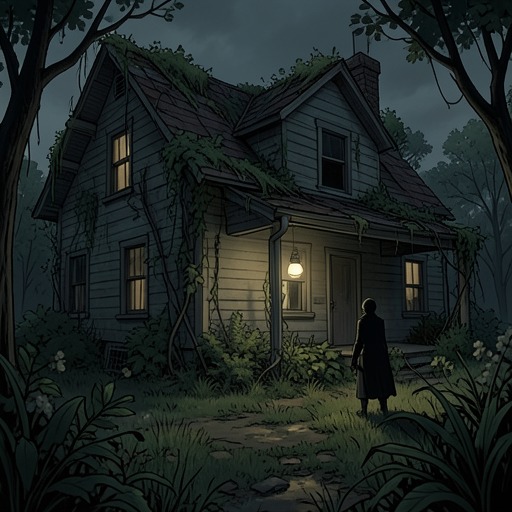
Michael Returns to Sara Laughs
Michael left the Delhi residence, which he had paid off the mortgage for, and drove to Sarah's Laughing House, only bringing a few personal items and a portable computer. Although years away had made him uneasy, he decided to stay by the lake, facing the thing he had always avoided
July 4, 1998, morning
The Child on Route 68
The first complete day he brought back, Michael saw three-year-old Kira Elizabeth DeWol alone walking on the center line of Highway 68. He stopped his car, picked her up to a safe place, and signaled her mother, Marty DeWol, to stop her old Jeep from
July 4, 1998, shortly after the roadside rescue
The Name Kia
When Michael talked to Marti, he heard the name of her daughter, which sounded like "Kaya," exactly the name that he and Joanna had chosen for their unborn daughter. Marti explained that the child's full name is Kela, which was chosen from a baby name book; but this
July 4, 1998, evening
Max Devore’s First Call
Michael was at Sarah's Laughing House watching fireworks when Maxwell William DeWol called him, dialing a number not listed in the phone book. He accused Marty of neglecting the children and tried to persuade Michael to confirm a version of an incident on the side road that was to Marty
Night of July 4, 1998
The Crying Child Returns
After hearing Sara's laughter and the child's crying in the house, Michael told himself that it might just be the sound of the pipes, but the crying sound gradually disappeared in an eerie way as before. While going to bed, he was still thinking whether the house had life, and whether the crying
July 5, 1998, morning
The Woman at the Sunset Bar
Walking along the lake shore path, Michael saw a white-haired, gaunt woman standing outside the sunset bar. She was motionless, her face eerie, making him think of Mrs. Dunfres; but when he looked back, she was gone. Later he realized she was Roger Whitmore
July 6, 1998, morning
The First Message on the Tape
Michael sets an old [Memo-Scriber](entity:object-recall-object-memo-scriber-174c3a0653f0) to record overnight, hoping to capture the mysterious crying. Instead, the machine contains Johanna’s faint voice saying, “Oh Mike.” The recording persuades him that a presence in the house may be trying to communicate, and that its voice is connected to his dead wife rather than only to the crying child.
July 6, 1998, daytime
Thumps in the Cellar
Michael investigates the cellar after a door slams shut behind him and hears a fistlike thud from below. Using the one-tap/two-tap code, he asks whether the unseen presence is Johanna and whether she wants him to find the [plastic owls](entity:object-recall-object-d0dd9f9bce64); the answer suggests both yes and no to questions about safety. He finds no physical visitor, but the cold air and repeated knocks make the haunting impossible to dismiss.
July 6, 1998, after Michael’s cellar encounter
The Refrigerator Says Hello
After returning upstairs, Michael finds the refrigerator magnets rearranged to spell “hello.” He addresses the unseen presence aloud, accepting that something is communicating through the house. The message also confirms that the haunting can leave physical signs in broad daylight, turning the refrigerator into an improvised channel of contact.
July 7, 1998
The Subpoena
Deputy [George Footman](entity:character-recall-character-george-footman-f9497caf57de) serves Michael with a subpoena to give a deposition about Kyra’s welfare in the custody dispute. Footman privately warns him not to interfere with [Maxwell Devore](entity:character-recall-character-maxwell-devore-4fcf0b4a07c9). Alarmed and angry, Michael calls [Harold Oblowski](entity:character-recall-character-harold-oblowski-12b882767fae), who finds him a custody lawyer, [John Storrow](entity:character-recall-character-john-storrow-02a5045d6dc4), and Michael decides to help Mattie despite the risk of becoming entangled in the case.
July 7, 1998, evening
Mattie Tells Her Story
At dinner, Mattie explains her difficult childhood, her marriage to [Lance](entity:character-recall-character-lance-babd4baab531), his death in a lightning accident, and [Maxwell Devore](entity:character-recall-character-maxwell-devore-4fcf0b4a07c9)’s earlier attempts to pay her to leave Lance and surrender Kyra. She says she stopped allowing Kyra to visit her grandfather after growing frightened by the visits and by Devore’s pressure campaign. Michael offers to pay for legal representation, and Mattie accepts help for her daughter’s sake.
July 7, 1998, later that night
Jo’s Secret at the Ballfield
Mattie recalls meeting [Lance](entity:character-recall-character-lance-babd4baab531) at a softball game and seeing Johanna there in July 1994, accompanied by a burly man in a brown sportcoat. The memory shocks Michael, who had believed Johanna had not visited the lake that summer. Mattie admits the couple walked toward [The Street](entity:location-recall-location-the-street-8bb8de60ee79), not the parking lot, reviving Michael’s fear that his wife kept important secrets from him.
Night of July 7, 1998
The Fridge Spells a Warning
After Michael returns home, the refrigerator letters spell “blue rose liar ha ha,” apparently accusing Johanna of lying about the man at the ballfield. Michael scatters the magnets, but the message intensifies his uncertainty about his marriage. The supernatural communications now seem to touch not only his grief but also the secrets he is beginning to uncover about Johanna’s final year.
Night of July 7–8, 1998
The Stenomask Dream
Michael experiences a feverish, interwoven dream of Johanna, Mattie, and [Sara Tidwell](entity:character-recall-character-sara-tidwell-2266f40274e0), ending in a sexualized vision and his unexplained sleepwalk to [Jo](entity:character-recall-character-jo-ef997b5228d8)’s studio. He wakes in the upstairs hall beside his old IBM Selectric, with pine needles on his feet and a typed page naming the women and “normal sperm count.” The episode marks both a dangerous breach between dream and waking life and the return of Michael’s ability to write.
July 8, 1998, morning
Michael Resumes Writing
Michael sits at the recovered IBM Selectric and types the opening of a new novel, My Childhood Friend. For the first time in four years, his writing comes without panic or nausea. The breakthrough gives him renewed purpose, but it also leaves him vulnerable to the uncanny forces at [Sara Laughs](entity:location-recall-location-sara-laughs-74d08452ae42) and to his impulse to retreat into fiction rather than face what is happening around him.
July 9–10, 1998
Mattie’s Fight Gains Momentum
[John Storrow](entity:character-recall-character-john-storrow-02a5045d6dc4) arrives to advise Mattie, while a local lawyer, [Romeo Bissonette](entity:character-recall-character-romeo-bissonette-1f2c68652aa4), accompanies Michael to [Elmer Durgin](entity:character-recall-character-elmer-durgin-858ce3ebbbee)’s deposition. Durgin questions Michael aggressively about the highway incident and tries to use a tape of Michael’s call with Maxwell against him. Michael refuses to provide the desired version, and Bissonette checks Durgin’s leading tactics, preventing the deposition from becoming a simple weapon for Devore.
Mid-July 1998, before July 17
Durgin’s Bribery Is Exposed
[John Storrow](entity:character-recall-character-john-storrow-02a5045d6dc4)’s investigator discovers that [Elmer Durgin](entity:character-recall-character-elmer-durgin-858ce3ebbbee) has recently paid off debts and bought a boat, raising suspicions that Devore has bribed the court-appointed guardian ad litem. The discovery strengthens Mattie’s position and makes John believe Devore may abandon the custody suit. The legal pressure appears to ease, though Michael remains wary of Maxwell’s power and of the unexplained threats surrounding the lake.
Night of July 8, 1998, revealed through later recollection
The Ghost Fair
Michael and Kyra share a vivid time-slip to the turn-of-the-century [Fryeburg Fair](entity:location-recall-location-fryeburg-fair-605d772cc3e2). They encounter [Sara Tidwell](entity:character-recall-character-sara-tidwell-2266f40274e0) performing in Mattie’s dress and see a line of jackboys led by an earlier [Jared Devore](entity:character-recall-character-jared-devore-d375b001f5b0) trying to seize Kyra. Michael escapes with the child through the fair’s [Ghost House](entity:location-recall-location-ghost-house-4b2377109261), where the toy-dog Strickland helps orient the journey back toward the present.
Night of July 8, 1998
Michael Hears Jo Scream
After returning from the fair vision, Michael hears Johanna screaming inside the house, as if someone is hurting her. He shouts for the unseen attacker to stop, but the cries fade away down an impossible corridor. The episode confirms that Johanna’s presence is not merely a comforting voice and that she may be struggling against the same force that threatens Kyra.
July 12, 1998
The Ghost Fair’s Warning
Michael goes through local histories and photographs while trying to learn about [Sara and the Red-Tops](entity:character-recall-character-sara-and-the-red-to-e34e186c8856). He notices that town residents’ stories omit crucial events and that the past remains active beneath ordinary life. His growing understanding of the community’s buried history makes him question the lake’s disturbances and the town’s unwritten agreement to keep old crimes unspoken.
July 17, 1998, evening
Max Devore Threatens Michael
Michael encounters [Maxwell Devore](entity:character-recall-character-maxwell-devore-4fcf0b4a07c9) and [Rogette Whitmore](entity:character-recall-character-rogette-whitmore-270c2ff9eb91) on [The Street](entity:location-recall-location-the-street-8bb8de60ee79) after seeing a vision of a drowned boy. Devore insults him, orders him to abandon Mattie and Kyra, and charges at him in his motorized wheelchair; Whitmore strikes him with a ring. They then pelt Michael with rocks while he swims, forcing him toward exhaustion and near-drowning.
July 17, 1998, during the attack
Jo Pulls Michael to Safety
As Michael begins to drown, he hears Johanna’s voice telling him he can reach the swimming float. Hands seize his neck and leg, release his cramp, and help him make the final swim. When he reaches safety, Devore and Whitmore have vanished, leaving Michael with injuries, a deepened sense of danger, and the knowledge that Johanna may be physically intervening from beyond death.
July 17, 1998, night
The Truce Offer
[Richard Osgood](entity:character-recall-character-richard-osgood-95e84fec5ab0) delivers a letter from [Rogette Whitmore](entity:character-recall-character-rogette-whitmore-270c2ff9eb91) offering to end the custody fight if Michael and Mattie stop asking questions and withdraw their legal maneuvers. The letter’s mocking postscript repeats Devore’s obscene question about Mattie. Michael rejects the intimidation and tells Whitmore that any further attack will be met with resistance, while privately recognizing that the apparent truce may be a trap.
July 18, 1998, shortly before midnight
Max Devore’s Suicide
[Bill Dean](entity:character-recall-character-bill-dean-deb3479eae4a) calls Michael with news that [Maxwell Devore](entity:character-recall-character-maxwell-devore-4fcf0b4a07c9) has killed himself in a bathtub with a plastic bag over his head. Rogette immediately holds a press conference to reassure the computer company’s shareholders and says Devore had left instructions. Mattie is relieved, but Michael suspects the death has not ended the danger, especially after reading the timing and language of the earlier letter as a suicide note.
July 19–20, 1998
The Conditional Bequest
Rogette informs [John Storrow](entity:character-recall-character-john-storrow-02a5045d6dc4) that Maxwell’s will leaves Mattie eighty million dollars on the condition that she remain in [TR-90](entity:location-recall-location-tr-90-1fc1b551ca9c) for a year. John treats the restriction as legally dubious, but Michael understands it as another attempt to keep Mattie and Kyra within the territory Devore had claimed. The supposed victory therefore does not free them from the lake’s influence or the danger that has gathered around them.
July 19–20, 1998
Carla Dean’s Name
After a violent supernatural disturbance rearranges the refrigerator magnets to spell CARLA DEAN, Michael asks [Brenda Meserve](entity:character-recall-character-brenda-meserve-943c9c599f60) who Carla was. Brenda reveals that Carla was [Bill Dean](entity:character-recall-character-bill-dean-deb3479eae4a)’s twin sister, who died during the 1933 fires. The revelation connects the haunting to an old local tragedy and confirms that the messages may be directing Michael toward crimes hidden by the town’s families.
July 19, 1998
Royce Merrill’s Fatal Fall
[Royce Merrill](entity:character-recall-character-royce-merrill-43658876653b) falls down his cellar stairs and dies without regaining consciousness. Michael suspects the death is not an accident, while the town prepares to gather for the funeral. Royce had been one of the oldest witnesses to the lake’s history and had spoken with Johanna during her investigation; his death removes another potential source of truth.
July 19–20, 1998
Michael Learns Jo’s Visits
Michael learns from [Bill Dean](entity:character-recall-character-bill-dean-deb3479eae4a) and [Frank Arlen](entity:character-recall-character-frank-arlen-a3cdf951988d) that Johanna repeatedly visited the TR during 1993 and 1994, quit her charitable boards, interviewed locals, and investigated [Sara Tidwell](entity:character-recall-character-sara-tidwell-2266f40274e0) and the region’s history. [Frank](entity:character-recall-character-frank-aae9eaa69e27) says Johanna believed the house was dangerous and feared that Michael would not listen while absorbed in his writing. The revelations change Michael’s understanding of their marriage and show that she had been trying to prepare him for what he would eventually face.
July 19–20, 1998
The Drowning Vision
Michael experiences another overwhelming vision of a drowned child, sensing the boy’s terror and hearing pleas for help. The apparition appears connected to the lake and to a history of concealed violence. Michael begins to understand that the child’s cry is not simply a haunting but a demand that someone acknowledge what happened.
July 19–20, 1998
The Library Reinstates Mattie
[Lindy Briggs](entity:character-recall-character-lindy-briggs-eb3a3b8c421f) tells Mattie that she may return to her library job after Devore’s death ends the pressure on the institution. Mattie is happy to regain her livelihood, but Michael remains convinced that she and Kyra are still in danger. He warns her to be careful around [Bill Dean](entity:character-recall-character-bill-dean-deb3479eae4a) and [Kenny Auster](entity:character-recall-character-kenny-auster-0cd37de872b6), acting on impressions he cannot yet explain.
July 20, 1998
The House Names Its Dead
Michael studies the [Castle County telephone directory](entity:object-recall-object-castle-county-1f7199295402) and finds an extraordinary concentration of K-names among old local families. He realizes that generations of families have repeatedly named children after [Kito](entity:character-recall-character-kito-69ecd85658ce), the murdered son of [Sara Tidwell](entity:character-recall-character-sara-tidwell-2266f40274e0), as if the community had unconsciously memorialized its buried crime. A note from the refrigerator—“go down 19” and “go down 92”—will later lead him to the hidden evidence.
Night of July 20, 1998
Michael and Kyra’s Fair Journey
Michael dreams—or experiences a genuine time-slip—with Kyra at the [1900](entity:time-recall-time-1900-a6b17cfe5ca2) [Fryeburg Fair](entity:location-recall-location-fryeburg-fair-605d772cc3e2). They see Sara performing and encounter the dead men who once attacked her, now trying to take Kyra. The child recognizes the danger and leads Michael through the fair’s [Ghost House](entity:location-recall-location-ghost-house-4b2377109261) to the present. A blue ribbon from Kyra’s straw hat remains with Michael, proving the journey crossed into physical reality.
July 20–21, 1998
Max Devore’s Attack Is Uncovered
[John Storrow](entity:character-recall-character-john-storrow-02a5045d6dc4) plays Michael a recorded call with Rogette in which she discusses the will and refers to Michael as Mattie’s lover. Michael realizes Rogette is still in the TR despite claiming to be in California, and that her voice’s familiar telephone hum gave her away. The evidence makes him suspect that she remains involved in a plan against Mattie and Kyra.
July 21, 1998, morning
The Old-Timers Gather
As a severe storm approaches, Michael and Mattie prepare a celebratory barbecue with John, [Romeo Bissonette](entity:character-recall-character-romeo-bissonette-1f2c68652aa4), and investigator [George Kennedy](entity:character-recall-character-george-kennedy-777bfe162cf1). Mattie is newly hopeful after regaining her job, while Michael remains uneasy about the old families and the town’s buried past. He has discovered that the refrigerator messages and Johanna’s clues point toward the studio and the hidden history beneath [Sara Laughs](entity:location-recall-location-sara-laughs-74d08452ae42).
July 21, 1998, around noon
The Shooting at Mattie’s Party
A car drives past Mattie’s trailer, turns around, and its masked occupants open fire with a submachine gun. Mattie is struck in the head and fatally wounded; John and Romeo are shot, and [George Kennedy](entity:character-recall-character-george-kennedy-777bfe162cf1) returns fire, overturning the attackers’ car. Michael holds Mattie as she dies, assuring her that Kyra is safe, while the storm gathers and the town’s hidden forces close in.
July 21, 1998, shortly after the shooting
Michael Rescues Kyra
Michael carries Kyra away from her mother’s body and secures her in his car as the attackers’ vehicle burns. He knocks [George Footman](entity:character-recall-character-george-footman-f9497caf57de) unconscious with a hammer, binds no one but leaves the injured people for rescue, and drives Kyra toward [Sara Laughs](entity:location-recall-location-sara-laughs-74d08452ae42). The choice places the child in the only shelter Michael believes remains, but it also brings her into the center of the supernatural conflict.
July 21, 1998, afternoon
The Storm Destroys the TR
Michael drives Kyra through violent hail and rain toward [Sara Laughs](entity:location-recall-location-sara-laughs-74d08452ae42) as lightning ignites a barn and fells trees across the roads. The storm damages homes, cuts power, and turns the lakefront into a landscape of falling trees and floodwater. At the house, Kyra’s stuffed dog is swept down the driveway; the three sunflowers from Michael’s dreams catch it, making the dream and reality converge unmistakably.
July 21, 1998, during the storm
The Temptation in the Bathtub
After putting Kyra to bed, Michael nearly gives in to a supernatural impulse to drown her in the bathtub and then kill himself. He believes Sara’s force has entered him and is exploiting his grief, despair, and connection to the lake. The ringing of [Bunter](entity:object-recall-object-bunter-b7ad0eb23dc7)’s bell and the voice saying “Nineteen” redirect him to Johanna’s concealed message in his novel manuscript.
July 21, 1998, during the storm
The Hidden Message in the Manuscript
Michael discovers that the first letters down page nineteen and page ninety-two of My Childhood Friend spell “owls under studio.” He realizes Johanna had embedded the message throughout the novel and that his return to writing may have been guided by her. Her clues lead him to the concealed storage space beneath [Jo](entity:character-recall-character-jo-ef997b5228d8)’s Studio, even as the storm and the hostile spirit resist him.
July 21, 1998, during the storm
The Hidden Owl Archive
Michael forces his way into [Jo](entity:character-recall-character-jo-ef997b5228d8)’s Studio and faces a violent poltergeist attack that destroys Johanna’s crafts while she struggles against Sara and an entity called the Outsider. Beneath a trapdoor he finds the [plastic owls](entity:object-recall-object-d0dd9f9bce64) and a tin box hidden inside one, containing Johanna’s research notes, clippings, notebooks, and a photographic negative. The archive proves that Johanna had uncovered a buried crime and hidden the evidence for him to find.
July 21, 1998, during the storm
Rogette’s Kidnapping Attempt
Michael follows Kyra’s trail south along [The Street](entity:location-recall-location-the-street-8bb8de60ee79) and finds her balancing on the storm-battered dock to [The Sunset Bar](entity:location-recall-location-the-sunset-bar-24137d1c9d28) while Rogette coaxes her with chocolate. Kyra refuses to return to her, and Michael rushes in to intervene. Rogette’s wig comes off, revealing that she is [Maxwell Devore](entity:character-recall-character-maxwell-devore-4fcf0b4a07c9)’s daughter and Kyra’s aunt, not merely his assistant.
July 21, 1998, during the confrontation on the dock
Mattie’s Final Visit
A surge of water forms Mattie’s apparition, which appears between Rogette and Kyra and drives the older woman into the lake. Michael pulls Rogette from the water, but the broken dock impales her and the waves carry her away. Mattie’s spirit briefly meets Kyra’s arms before dissolving into lakewater, leaving the child with a final farewell and Michael as her protector.
Evening of July 21, 1998, and the following months
The Aftermath of the Storm
[Michael returns to Sara Laughs](entity:event-recall-event-f18669fe99b4) with Kyra, while Sheriff Norris Ridgewick arrives with rescue crews after the storm. Mattie’s death, Rogette’s disappearance, and the attack are investigated; [George Footman](entity:character-recall-character-george-footman-f9497caf57de) is arrested after evidence ties him and [Richard Osgood](entity:character-recall-character-richard-osgood-95e84fec5ab0) to Devore’s plan. The old-timers gather to mourn and gossip, and the township begins repairing the widespread damage.
Late summer through Christmas 1998
Kyra Enters Foster Care
The Maine court and human-services system move slowly, and Kyra spends time in two foster placements while Michael seeks to adopt her. [John Storrow](entity:character-recall-character-john-storrow-02a5045d6dc4) helps him through the difficult process, while Kyra repeatedly tells officials that she wants to live with Michael. Michael becomes a devoted parent, checking on her through the night and limiting his drinking whenever she is in his care.
After the storm, before Christmas 1998
Michael Gives Kyra Jo’s Keepsake Box
Michael gives Kyra Johanna’s tin box, which she treasures as a place for private keepsakes. He also shows her the negative photograph of Johanna on the swimming float. Kyra recognizes [Jo](entity:character-recall-character-jo-ef997b5228d8) as one of the “fridgeafator people,” creating a gentle bridge between the child and the woman whose clues saved her.
Christmas 1998
Christmas with Frank
Michael, Kyra, and [Frank](entity:character-recall-character-frank-aae9eaa69e27) spend Christmas together, with Michael staying alert to Kyra’s safety and finding a new purpose in caring for her. Frank listens as Michael recounts the supernatural events and accepts the story because Johanna believed it and because he recognizes something unusual in Kyra. The family’s warmth offers a fragile refuge from grief, trauma, and the slow adoption proceedings.
Winter 1998–1999
The Adoption Struggle Continues
Michael continues trying to adopt Kyra, but the process remains slow and complicated by his status as an unmarried middle-aged man. [John Storrow](entity:character-recall-character-john-storrow-02a5045d6dc4) reassures him that Kyra’s repeated wishes to live with him and Michael’s stable resources strengthen their case. Despite the uncertainty, Michael has become her dependable father figure and she has become the center of his life.
After the July 1998 storm, recounted in the epilogue
Michael Abandons the Novel
Michael does not resume his career after the events at [Sara Laughs](entity:location-recall-location-sara-laughs-74d08452ae42). He destroys the pages of My Childhood Friend rather than preserve a work tied to the supernatural crisis and to the dangerous ease of escaping into fiction. The experience changes how he regards made-up violence and his own writing; he would rather devote himself to Kyra than return to the novel’s shadow world.
Epilogue, later in 1998
Michael Chooses a Life with Kyra
Michael reflects that grief and the memories of Mattie and Johanna remain, but caring for Kyra gives his life a purpose he had lost. He hopes the adoption will succeed and recognizes that their bond has been altered by what they experienced together. The house is quiet now, though occasional signs suggest Johanna may still be near.
Epilogue, after Christmas 1998
Michael Lays Down His Pen
When [Frank](entity:character-recall-character-frank-aae9eaa69e27) asks whether he has begun writing again, Michael says no. He has written the account of the summer but has no desire to return to conventional fiction, which now seems trivial beside the dead and the living he must care for. He chooses not to write, echoing Bartleby’s refusal, and leaves the future of his career uncertain.